

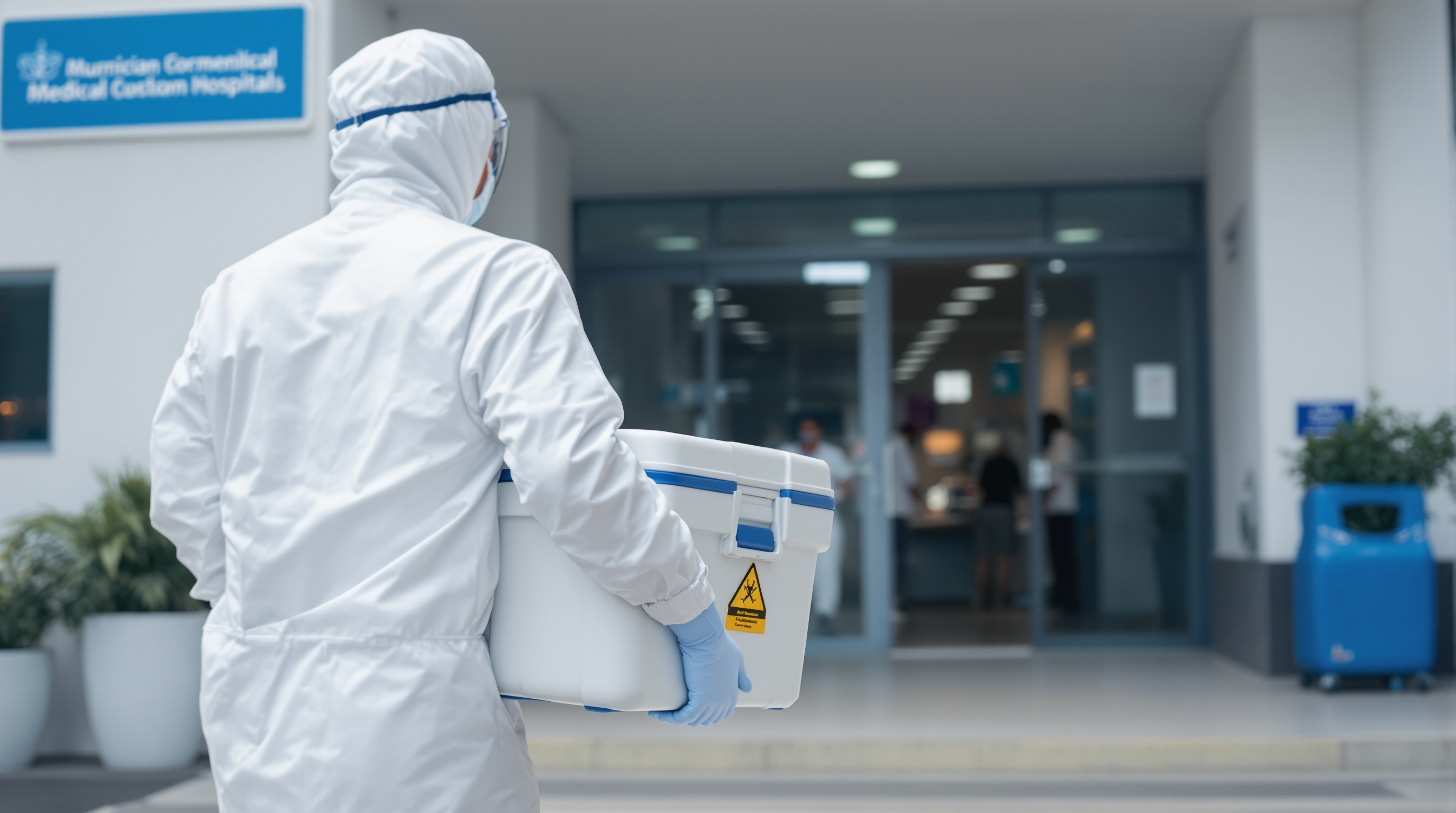
When a Courier Failure Becomes a Clinical Failure
In most industries, a late delivery is an inconvenience. In healthcare, it can be a clinical event. A blood sample that exceeds its stability window produces an invalid result. A vaccine that breaks cold chain must be discarded. A biopsy that arrives after the pathologist's cut-off misses the reporting cycle by 24 hours.
These aren't hypothetical scenarios — they happen regularly in South Africa when healthcare providers use general couriers for medical deliveries.
The 5 Non-Negotiable Requirements for Medical Courier Services
1. Temperature Control and Cold Chain Compliance
Different medical specimens and pharmaceuticals have different temperature requirements. Blood samples must be maintained at 2–8°C. Vaccines require 2–8°C with no freeze events. Some biologics require -20°C or -80°C. That temperature integrity is your responsibility — you pre-cool, seal and pack your specimens into your own validated cooler. The courier's job is to collect that sealed package and move it directly, with documented chain of custody — not to pretend a cooler bag from a hardware store is temperature control.
2. Cold Chain & Quality Management
Pharmaceutical products must be transported sealed and direct, with documented chain of custody from collection to receipt. You prepare and seal the cold chain; the courier moves it fast and hands it over with proof. A courier that promises temperature-controlled vehicles it does not have is a risk.
3. Specimen Stability Windows
Every specimen type has a stability window — the time between collection and analysis during which the sample remains valid. Common windows include:
- Full blood count (FBC): 24 hours at 2–8°C
- Coagulation studies (PT/INR): 4 hours at room temperature
- Blood cultures: Must reach the lab within 2 hours of collection
- Urine cultures: 2 hours unrefrigerated, 24 hours refrigerated
- Tissue biopsies: Varies by fixative — typically 1–6 hours
A same-day medical courier that can't guarantee delivery within these windows is not fit for purpose.
4. Chain of Custody Documentation
Medical specimens require documented chain of custody from collection to receipt at the laboratory. This includes: collector name and time, courier name and handover time, your temperature log during transit, and recipient name and receipt time. This documentation is required for medico-legal cases and accreditation audits.
5. POPIA-Compliant Handling
Medical specimens and pharmaceutical deliveries often carry patient information. Under the Protection of Personal Information Act (POPIA), your courier is a data processor and must have a data processing agreement in place. Most general couriers don't have this — exposing your practice to regulatory risk.
Medical Courier Checklist for Healthcare Providers
UrgentGo's Medical Courier Service
UrgentGo operates a dedicated medical courier division across South Africa's major cities. Our medical couriers are trained in sealed specimen handling and direct routing. Every medical delivery includes chain of custody documentation and real-time GPS tracking — so your pre-packed, sealed specimens get where they need to go, fast and traceable.
We deliver to all major South African pathology laboratories including Lancet, Ampath, PathCare, and Disa Lab, as well as hospital pharmacies, blood banks, and research facilities.
The Cost of Getting It Wrong
A failed medical delivery doesn't just inconvenience a patient — it can trigger a cascade of clinical and administrative consequences: repeat blood draws, delayed diagnoses, wasted pharmaceuticals, accreditation findings, and in serious cases, patient harm. The cost of a reliable medical courier is trivial compared to the cost of a single clinical failure.